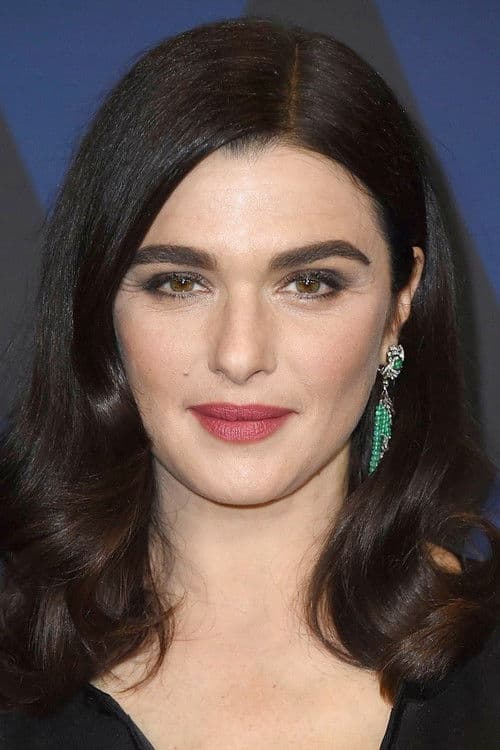
Age: 35
female
Margot Elise Robbie (born 2 July 1990) is an Australian actress and producer. Her work includes blockbusters and independent films, and her accolades include nominations for three Academy Awards, four Golden Globe Awards, and six BAFTA Awards. Time named her one of the 100 most influential people in the world in 2017, and Forbes named her the world's highest-paid actress in 2023. Born and raised in Queensland, Robbie began her career in 2008 on the television series Neighbours, on which she was a regular until 2011. After moving to the United States, she led the television series Pan Am (2011–2012). She had her breakthrough in 2013 with Martin Scorsese's black comedy film The Wolf of Wall Street. She achieved wider recognition by starring in the roles of Jane Porter in The Legend of Tarzan (2016) and Harley Quinn in the DC Extended Universe films, beginning with Suicide Squad (2016). Robbie received critical acclaim and a nomination for the Academy Award for Best Actress for her portrayal of figure skater Tonya Harding in the biopic I, Tonya (2017). This acclaim continued for her performances as Queen Elizabeth I in Mary Queen of Scots (2018), Sharon Tate in Once Upon a Time in Hollywood (2019), and a Fox News employee in Bombshell (2019). The last of these earned her a nomination for the Academy Award for Best Supporting Actress. Robbie has since starred as an aspiring actress in the period film Babylon (2022) and the titular fashion doll in the fantasy comedy Barbie (2023), which emerged as her highest-grossing release and, as its producer, earned her a nomination for the Academy Award for Best Picture. Robbie and her husband, filmmaker Tom Ackerley, co-founded the production company LuckyChap Entertainment in 2014, under which they have produced several films, including I, Tonya, Promising Young Woman (2020), Barbie, and Saltburn (2023), as well as the Hulu series Dollface (2019–2022) and the Netflix miniseries Maid (2021).
Margot Robbie
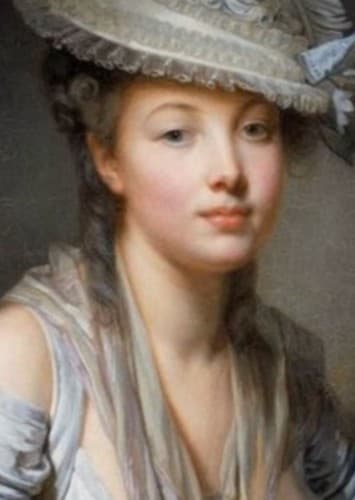
Olympe de Gouges
for Olympe de Gouges in The French Revolution
Suggested by monkey2

It is 1789 and France is beset by a number of problems. The treasury is empty and the country is facing bankruptcy. While the majority of the common people live in unimaginable poverty, the nobility and the clergy do not have to pay taxes and are living in luxury. In this situation, King Louis XVI decides to convene the Estates-General at Versailles. The negotiations go nowhere, so the Third Estate decides to invite the other Estates to join it, and a National Assembly is proclaimed. Some of the nobility and clergy do indeed join. All involved swear not to disperse until a constitution is drawn up. On July 9, 1789, this assembly declared itself the Constituent National Assembly. In this situation, King Louis XVI decides to send troops to Versailles. In protest against this move, the Parisians storm the royal armoury. Here they seize thousands of rifles and form a militia. Early in the morning of 14 July 1789, they attack the Bastille, a symbol of royal oppression. After a five-hour battle, they succeed in taking the prison. Thus begins the Great French Revolution, which changed Europe forever. An event that brought many progressive ideas, but also a bloody terror that eventually brought not only King Louis XVI to the guillotine, but also most of the leaders of the revolution itself. P.S., In my opinion, it would be best to treat this topic in the form of a historical miniseries on HBO MAX or Amazon Prime, for example.
Loading comments...