

Stories by @devahutiraichaliha
323 stories

The American
Henry James's third novel is an exploration of his most powerful, perennial theme - the clash between European and American cultures, the Old World and the New. Christopher Newman, a 'self-made' American millionaire in France, falls in love with the beautiful aristocratic Claire de Bellegarde. Her family, however, taken aback by his brash American manner, rejects his proposal of marriage. When Newman discovers a guilty secret in the Bellegardes' past, he confronts a moral dilemma: Should he expose them and thus gain his revenge? James's masterly early work is at once a social comedy, a melodramatic romance and a realistic novel of manners.

The Ambassadors
Sent from Massachusetts by the formidable Mrs. Newsome to recall her son, Chad, from what she assumes to be a corrupt life in Paris, Strether finds his intentions subtly and profoundly transformed as he falls under the spell of the city and of his charge. He is quick to perceive that Chad has been not so much corrupted as refined, and over the course of the hot summer months in Paris he gradually realizes that this discovery and acceptance of Chad's unconventional new lifestyle alter his own ideals and ambitions.

All's Well That Ends Well
Helena, a ward of the Countess of Rousillion, falls in love with the Countess's son, Bertram. Daughter of a famous doctor, and a skilled physician in her own right, Helena cures the King of France-who feared he was dying-and he grants her Bertram's hand as a reward. Bertram, however, offended by the inequality of the marriage, sets off for war, swearing he will not live with his wife until she can present him with a son, and with his own ring-two tasks which he believes impossible. However with the aid of a bed trick, Helena fulfils his tasks, Bertram realises the error of his ways, and they are reconciled.

All Quiet on the Western Front
All Quiet on the Western Front (German: Im Westen nichts Neues, lit. 'Nothing New in the West') is a novel by Erich Maria Remarque, a German veteran of World War I. The book describes the German soldiers' extreme physical and mental stress during the war, and the detachment from civilian life felt by many of these soldiers upon returning home from the front.

Year of Wonders
When an infected bolt of cloth carries plague from London to an isolated village, a housemaid named Anna Frith emerges as an unlikely heroine and healer. Through Anna's eyes we follow the story of the fateful year of 1666, as she and her fellow villagers confront the spread of disease and superstition. As death reaches into every household and villagers turn from prayers to murderous witch-hunting, Anna must find the strength to confront the disintegration of her community and the lure of illicit love. As she struggles to survive and grow, a year of catastrophe becomes instead annus mirabilis, a "year of wonders".

People of the Book
The story focuses on imagined events surrounding the protagonist and real historical past of the still extant Sarajevo Haggadah, one of the oldest surviving Jewish illuminated texts. In 1996, Hanna Heath, an Australian rare-book expert, is offered the job of a lifetime: analysis and conservation of the famed Sarajevo Haggadah, which has been rescued from Serb shelling during the Bosnian war. Priceless and beautiful, the book is one of the earliest Jewish volumes ever to be illuminated with images. When Hanna, a caustic loner with a passion for her work, discovers a series of tiny artifacts in its ancient binding—an insect wing fragment, wine stains, salt crystals, a white hair—she begins to unlock the book’s mysteries...
All But My Life
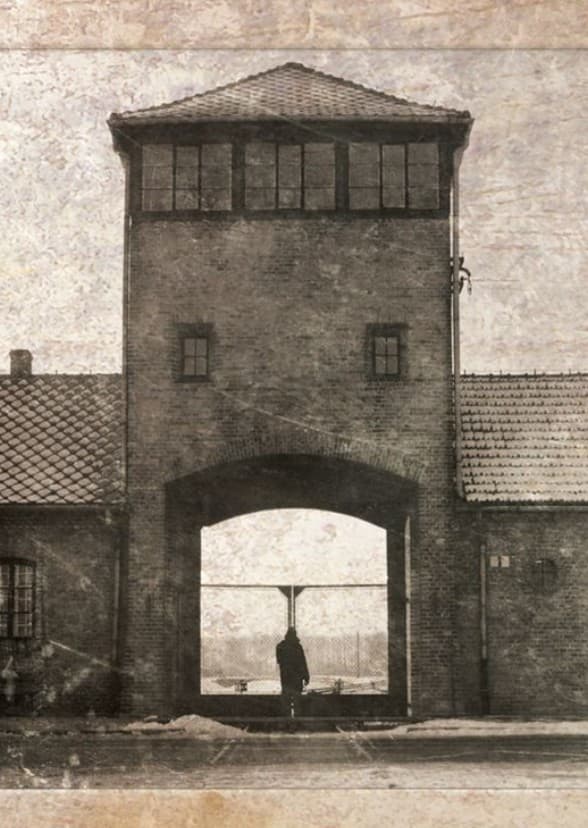
All But My Life is the unforgettable story of Gerda Weissmann Klein's six-year ordeal as a victim of Nazi cruelty. From her comfortable home in Bielitz (present-day Bielsko) in Poland to her miraculous survival and her liberation by American troops—including the man who was to become her husband—in Volary, Czechoslovakia, in 1945, Gerda takes the reader on a terrifying journey.

The Ruby Brooch
From the white-plank fenced pastures of Lexington, Kentucky, to the beautiful Bay of San Francisco, The Ruby Brooch, a saga rich in detail and mystery, follows a young woman’s physical and emotional journey as she searches for the truth she believes will heal her wounds, restore her sense of self, and allow her to move on with her life. As the lone survivor of a car crash that killed her parents, paramedic Kit MacKlenna makes a startling discovery that further alters her life. A faded letter and a well-worn journal reveal that she was abandoned on her father’s doorstep as a baby. The only clues to her identity are a blood-splattered shawl, a locket that bears a portrait of a nineteenth-century man, and a Celtic brooch with mystical powers. Following notes in her late father’s journal, Kit sets out on a quest to solve the murders of her birth parents and discover her true identity. Under the guise of the Widow MacKlenna, Kit calls on the power of the ruby brooch and is swept back in time to Independence, Missouri, in the year 1852.

Alas, Babylon
The story is set in a fictional 1959, following two years of escalating tensions between the United States and the Soviet Union for dominance in the Middle East and in the Mediterranean Sea. The Soviets are menacing Turkey from three sides through their proxies in Egypt, Syria and Iraq in order to gain control of the Bosporus and give free passage to their large Mediterranean fleet. To counteract the Soviet menace the United States established a military presence in Lebanon and are providing aid to their Turkish and Israeli allies. Narration follows the point of view of Randy Bragg, who lives an aimless life in the small Central Florida town of Fort Repose. His older brother, Colonel Mark Bragg, an Air Force Intelligence officer, sends a telegram ending in the words, "Alas, Babylon", a pre-established code between the brothers to warn of imminent disaster. Mark flies his family down to Fort Repose for their protection while he stays at Strategic Air Command headquarters at Offutt Air Force Base in Omaha, Nebraska.

Adam Bede
The novel follows four characters' rural lives in the fictional community of Hayslope—a rural, pastoral, and close-knit community in 1799. The novel revolves around a love "rectangle" among the beautiful but self-absorbed Hetty Sorrel; Captain Arthur Donnithorne, the young squire who seduces her; Adam Bede, her unacknowledged suitor; and Dinah Morris, Hetty's cousin, a fervent, virtuous and beautiful Methodist lay preacher.

Across Five Aprils
Matthew and Ellen Creighton have borne 12 children. Four remain living at home (Bill, Tom, Jenny and Jethro); John lives nearby with his wife Nancy and their two boys. Matthew's orphaned nephew Ebenezer Carron also lives at the homestead. Three of their children died within four days in July 1852 of “Childhood Paralysis.” The deaths of the “three little boys” led Ellen to be more lenient on youngest son Jethro (main character) than with her older children. Shadrach Yale is the schoolmaster from Pennsylvania that has noted the potential of young Jethro. He also has the love of 14-year-old Jenny Creighton, and wants a marriage, which her father disapproves due to her youth. Daughter Mary Ellen's death is of major importance in the story. She was headed home from a dance in her escort's wagon when one of the Burdow boys fired a weapon meant to scare the team. The wagon crashed and overturned, killing Mary instantly. The Burdows are a disrespected family, bearing the burden of gossip surrounding the family patriarch's reason for leaving his home state. The successive generations have been mocked and ostracized based on this gossip. The death of Mary Ellen further destroys their reputation in the community.

The Absolutely True Diary of a Part-Time Indian
The Absolutely True Diary of a Part-Time Indian is a first-person narrative novel by Sherman Alexie, from the perspective of a Native American teenager, Arnold Spirit Jr., also known as "Junior", a 14-year-old promising cartoonist. The book is about Junior's life on the Spokane Indian Reservation and his decision to go to an all-white public high school off of the reservation.

Absalom, Absalom!
Absalom, Absalom! details the rise and fall of Thomas Sutpen, a white man born into poverty in West Virginia who moves to Mississippi with the complementary aims of gaining wealth and becoming a powerful family patriarch. The story is told entirely in flashbacks narrated mostly by Quentin Compson to his roommate at Harvard University, Shreve, who frequently contributes his own suggestions and surmises. The narration of Rosa Coldfield, and Quentin's father and grandfather, are also included and re-interpreted by Shreve and Quentin, with the total events of the story unfolding in nonchronological order and often with differing details. This results in a peeling-back-the-onion revelation of the true story of the Sutpens. Rosa initially narrates the story, with long digressions and a biased memory, to Quentin Compson, whose grandfather was a friend of Sutpen's. Quentin's father then fills in some of the details to Quentin. Finally, Quentin relates the story to his roommate Shreve, and in each retelling, the reader receives more details as the parties flesh out the story by adding layers. The final effect leaves the reader more certain about the attitudes and biases of the characters than about the facts of Sutpen's story.

Sons and Lovers
It follows this idea: a woman of character and refinement goes into the lower class, and has no satisfaction in her own life. She has had a passion for her husband, so her children are born of passion, and have heaps of vitality. But as her sons grow up she selects them as lovers – first the eldest, then the second. These sons are urged into life by their reciprocal love of their mother – urged on and on. But when they come to manhood, they can't love, because their mother is the strongest power in their lives, and holds them. It's rather like Goethe and his mother and Frau von Stein and Christiana – As soon as the young men come into contact with women, there's a split. William gives his sex to a fribble, and his mother holds his soul. But the split kills him, because he doesn't know where he is. The next son gets a woman who fights for his soul – fights his mother. The son loves his mother – all the sons hate and are jealous of the father. The battle goes on between the mother and the girl, with the son as object. The mother gradually proves stronger, because of the ties of blood. The son decides to leave his soul in his mother's hands, and, like his elder brother go for passion. He gets passion. Then the split begins to tell again. But, almost unconsciously, the mother realises what is the matter, and begins to die. The son casts off his mistress, attends to his mother dying. He is left in the end naked of everything, with the drift towards death.

Odour of Chrysanthemums
Elizabeth Bates is the main character of the story. She has two young children and is pregnant with a third. She is waiting for her husband Walter, a coal miner, to come home. She thinks that he has gone straight to the pub after work and she feels angry. It turns out to be something completely different. In the end, she's come to realize that they really never did know each other.

Lady Chatterley's Lover
The story concerns a young married woman, the former Constance Reid (Lady Chatterley), whose upper-class husband, Sir Clifford Chatterley, described as a handsome, well-built man, is paralysed from the waist down due to a Great War injury. In addition to Clifford's physical limitations, his emotional neglect of Constance forces distance between the couple. Her emotional frustration leads her into an affair with the gamekeeper, Oliver Mellors. The class difference between the couple highlights a major motif of the novel, which is the unfair dominance of intellectuals over the working class. The novel is about Constance's realization that she cannot live with the mind alone; she must also be alive physically. This realization stems from a heightened sexual experience that Constance has only felt with Mellors, suggesting that love can only happen with the element of the body, not just the mind.

They Came on Viking Ships
In this story, we follow Hekja as she sails the high seas, discovers love and family, and finally finds out where she belongs. When Hekja's village gets raided by huge Vikings and she is captured to be used as a slave for her new mistress Freydis, Hekja only has her trusty dog Riki Snarfari and her fast legs to guide her. But will it be enough to survive in enemy territory?

Empire of the Moghul
The series consists of six volumes covering the rise and height of the Moghul Empire in medieval India.

Pride and Prejudice
Pride and Prejudice is an 1813 romantic novel of manners written by Jane Austen. The novel follows the character development of Elizabeth Bennet, the dynamic protagonist of the book who learns about the repercussions of hasty judgments and comes to appreciate the difference between superficial goodness and actual goodness. Its humour lies in its honest depiction of manners, education, marriage, and money during the Regency era in Great Britain. Mr. Bennet of Longbourn estate has five daughters, but his property is entailed and can only be passed to a male heir. His wife also lacks an inheritance, so his family will be destitute upon his death. Thus, it is imperative that at least one of the girls marry well to support the others, which is a motivation that drives the plot. The novel revolves around the importance of marrying for love rather than money or social prestige, despite the communal pressure to make a wealthy match.

Scandal in Sorrento
In this Italian romantic comedy set in the beautiful Bay of Naples, Marshal Antonio Carotenuto arrives back in his home town of Sorrento to take care of the local traffic police. Donna Sofia, an attractive fishmonger, has rented the home from the marshal who wants to reclaim his home. The woman refuses to leave but almost accepts marriage to Antonio almost as a joke to make Nicolino, a fisherman who she is genuinely in love with, jealous. She goes along with the marshal's wooing and agrees to dump her fiancé and says she will marry him instead. When the marshal realizes what she is doing, he jilts her instead and decides to woo his own landlady instead.