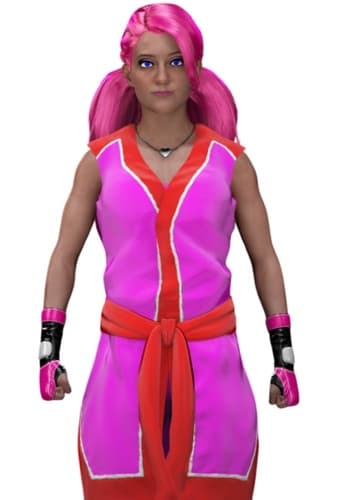
Coined in Japan in the late '90s, Moe (萌え; pronounced as "Mo-Eh", IPA: [mo̞e̞], derived from a Japanese word that means "budding, to sprout/bloom")note is an ill-defined otaku term that means, amongst other things, "cute", "huggable", or "endearing". While it's sometimes used to describe a series or the phenomenon called Perverse Lust, it's more about a specific ideal or kind of character, similar to Kawaisa. When used as an interjection, figuratively, it's used to convey that "something blooms inside your heart". It has a basis in the Bishoujo genre.
A common definition is that Moe is the ability of a character to instill in the audience an irrational desire to adore them, hug them, protect them, comfort them, etc. To evoke a sort of Big Brother Instinct or Heartwarming Moments, regardless of gender. Therefore, Moe characters are, generally speaking, cute.
Moe characters are implicitly youthful. In Anime, they are mostly of high school age, but adult characters are not exempt if they fit the model of adorability; an example of the Moe Archetype applied for adults is the Yamato Nadeshiko. Their personality will reflect an "innocent" outlook on something vital, such as romance. A related implication is that moe characters are virgins, though mostly in Japan, where virginity and purity still remain important to a girl's appeal.
The classical Moe character, based on that of Conservative Japanese customs, is highly associated with innocence, shyness, humility, submission, helplessness and woobie characteristics (e.g., Prone to Tears, Shrinking Violet, Extreme Doormat, Cute Clumsy Girl, The Ingenue, the Healing-type genre, etc., usually drawn with Tareme Eyes). However, modern variations of the Moe Archetype trend towards upbeat, lively, energetic, and extroverted personalities that are far more unique, noticeable, and recognizable, such as the Genki Girl, Manic Pixie Dream Girl, Broken Bird, and benign variants of the Tsundere archetype. Other contributions to uniqueness can also come in the form of quirks, reliance on Costume Exaggeration, odd language, strange hobbies, and the like. Occasionally, these quirks are completely unrelated and seem a bit disjointed.
If a character is plain, they are "loudly plain" in the way Hollywood Homely characters are "ugly"; sometimes they're just more moderate than the rest of the cast, and the writers implicitly suggest the audience is kind for liking the character for being plain.
More on these traits can be found here, although exactly "what is Moe" remains debatable.
Such characters are prone to be used to pander to the base. A character with no visible personality traits aside from vaguely cute uselessness is termed the dreaded "Moe Blob". As a result of this, some moe characters are quasi-Animated Actors; the series they star in need not be related at all, being only devices to enable the viewer to enjoy the character. Many of them feature in Gag Series, and only the merchandise for the series shows off its possibly intended roots, though quite a few merchandise producers use heavy amounts of artistic liberty when designing products.
Also, do note that the Moe aesthetic in itself is generally not considered to be a thing. Saying otherwise will be a Fandom-Enraging Misconception. That is not to say, of course, that Moe characters can never be sexually attractive, and indeed some aesthetics may deliberately blur the line.
Male characters can also have moe traits, and they figure prominently in Shoujo and Josei. Like their female counterparts, moe boys are usually ridiculously cute. The Adorably Precocious Child is a good example. Bishōnen characters (particularly Troubled, but Cute characters) also tend to evoke feelings of Moe in a female audience and are frequently called Moe by both fans and authors.
Oftentimes, characters who are simply genuinely kind and friendly people automatically qualify as Moe even if they lack any noticeable Moe traits, as their genuine kindness and friendliness are enough to invoke feelings of adoration and protectiveness towards them.