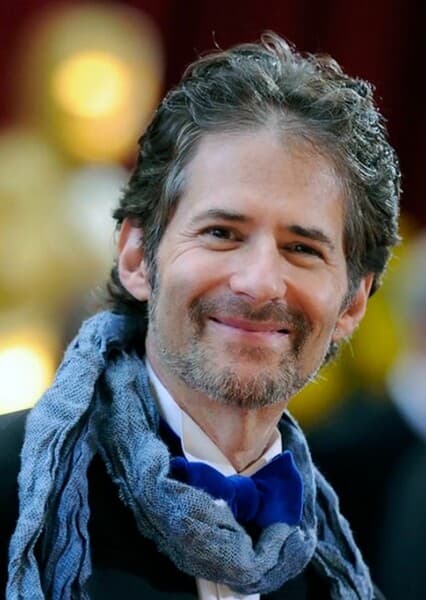
Died at 72
male
James Roy Horner (August 14, 1953–June 22, 2015) was an American film composer and conductor. He worked on more than 160 film and television productions between 1978 and 2015. He was known for the integration of choral and electronic elements alongside traditional orchestrations and for his use of motifs associated with Celtic music. Horner won two Academy Awards for his musical composition to James Cameron's Titanic (1997), which became the best-selling orchestral film soundtrack of all time. He also wrote the score for the highest-grossing film of all time, Cameron's Avatar (2009). Horner's other Oscar-nominated scores were for Aliens (1986), An American Tail (1986), Field of Dreams (1989), Apollo 13 (1995), Braveheart (1995), A Beautiful Mind (2001), and House of Sand and Fog (2003). Horner's other notable scores include Star Trek II: The Wrath of Khan (1982), Willow (1988), The Land Before Time (1988), Glory (1989), The Rocketeer (1991), Legends of the Fall (1994), Jumanji (1995), Casper (1995), Balto (1995), The Mask of Zorro (1998), Deep Impact (1998), The Perfect Storm (2000), How the Grinch Stole Christmas (2000), Troy (2004), The New World (2005), The Legend of Zorro (2005), Apocalypto (2006), The Karate Kid (2010), and The Amazing Spider-Man (2012). Horner collaborated on multiple projects with directors including James Cameron, Don Bluth, Ron Howard, Joe Johnston, Edward Zwick, Walter Hill, Mel Gibson, Vadim Perelman, Jean-Jacques Annaud, Nicholas Meyer, Wolfgang Petersen, Martin Campbell, Phil Nibbelink, and Simon Wells; producers including Steven Spielberg, George Lucas, David Kirschner, Brian Grazer, Jon Landau, and Lawrence Gordon; and songwriters including Will Jennings, Barry Mann, and Cynthia Weil. Adding to his two Academy Awards wins, Horner also won six Grammy Awards, two Golden Globes, and was nominated for three BAFTA Awards. Horner, who was an avid pilot, was killed in a single-fatality crash while flying his Short Tucano turboprop aircraft. He was 61 years old. The scores for his final three films, Southpaw (2015), The 33 (2015), and The Magnificent Seven (2016), were all completed and released posthumously. Description above from the Wikipedia article James Horner, licensed under CC-BY-SA, full list of contributors on Wikipedia.

The story begins in a futuristic domed city called Romdeau, built to protect its citizens after a global ecological disaster thousands of years prior. In this utopia, humans and androids known as AutoReivs coexist peacefully under a total management system. A series of murders committed by robots and AutoReivs infected with the Cogito virus (which causes them to become self-aware) begins to threaten the delicate balance of Romdeau's social order. Behind the scenes, the government has been conducting secret experiments on a mysterious humanoid life form called a "Proxy"; the Proxy beings (described as almighty, god-like, immortal, omnipotent) are believed to hold the very key to the survival of humanity. Re-l (also represented by the spelling "R.E.A.L." in the Romdeau citizen database) Mayer is assigned to investigate some of the murders with her AutoReiv partner, Iggy. She encounters two unknown and highly powerful creatures. She later learns that a Proxy was involved. The other central character, an immigrant named Vincent Law, is revealed to be connected in some ways with this Proxy. After being hunted down, Vincent lives in a commune on the outside of the dome for a while. During the massacre of the commune by Raul Creed of the Security Bureau, Vincent leaves the area for Mosk, his birthplace, in an attempt to recover his memories. Re-l later rejoins him to try to discover the truth behind the Proxies and the domes. It is revealed among other things that domes are all created by Proxies as well as the people inhabiting them who are created in special incubators. In the Romdeau arcology, the government is divided between several entities: the Intelligence Bureau, the Health & Welfare Bureau, and the Security Bureau, are named in the series, all under the control of an Administrator who is referred to as the "Regent" and grandfather of "R.E.A.L." The primary AutoReiv types are referred to as either "Companion" or "Entourage", depending on their role. There are others designed for leisure or combat functions; AutoReivs seem to be constructed of varying degrees of cybernetic complexity, as witnessed by AutoReivs on occasion producing blood splatter when shot and killed. The humans in the city are grown in artificial wombs but are still biologically related to their ancestors. Numerous times throughout the series it is stated that the humans living in the domes have no capacity to reproduce naturally, or at least that's what they have been told. Likewise, when a new person is grown, they are done so to fulfill a specific purpose, thus ensuring that person's future-place in society through a "raison d'être" (i.e., a "reason for existence").
Loading comments...